08 Jul 2026
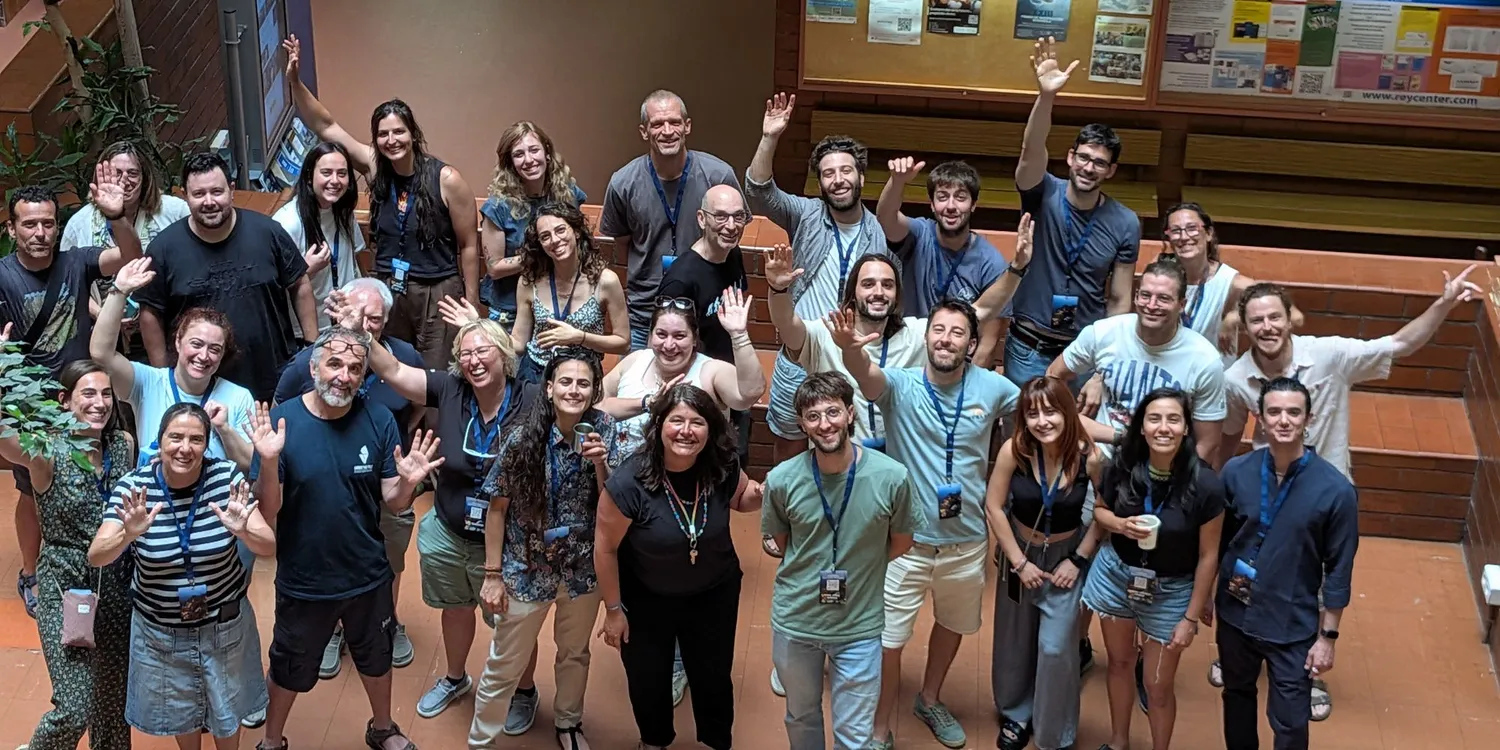
From 1 to 3 June, the Universitat de Barcelona hosted CHORAL – Collaborative science for advancing the conservation of highly diverse coralligenous assemblages, a Foresight Workshop funded by EuroMarine under its 2025 call and organised by the MedRecover research group. The event gathered researchers working on coralligenous habitats from institutions across the Mediterranean.
Coralligenous assemblages are among the Mediterranean's richest and most fragile marine habitats — biodiversity hotspots built up over centuries, mainly by coralline algae, that shelter a remarkable variety of species. Understanding their structure and function, and coordinating how they are studied across countries, is essential to protecting them in the face of mounting pressures.
The opening day was dedicated to research presentations. Torcuato Pulido Mantas illustrated an innovative application of point clouds for the quantitative analysis of the canopy structure of marine animal forests, while Claudia Campanini outlined the development and ongoing collaborative compilation of the Coralligenous Trait Database. Across the following days, participants discussed current tools and methodologies and, crucially, looked ahead — mapping future developments and projections to strengthen pan-Mediterranean collaboration on coralligenous science and conservation.
The workshop reflects the spirit of EuroMarine's Foresight Workshop programme, which supports member organisations in convening around emerging challenges in marine science and in building the networks needed to address them. Partners involved in CHORAL included the Universitat de Barcelona, CSIC, CoNISMa, the Università di Bologna, CIIMAR, MARE – Centro de Ciências do Mar e do Ambiente, and the Hellenic Centre for Marine Research.
With methodologies compared, a shared trait database taking shape, and new collaborations set in motion, CHORAL leaves a strong foundation for the coralligenous research community. Stay tuned for the outputs of these fruitful days!