26 Oct 2026
26 October 2026
6–13 June 2026 | Roscoff Biological Station, France
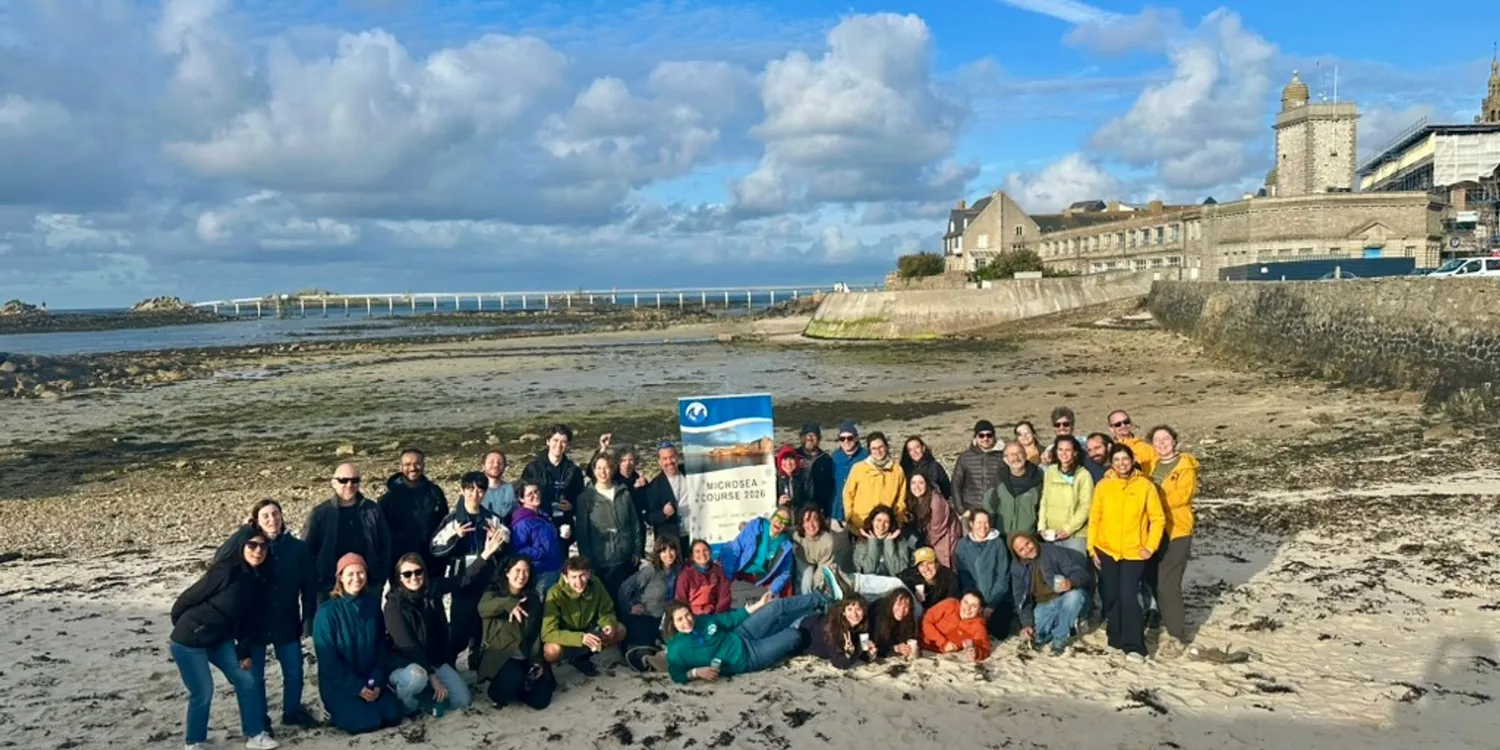
A week-long international training course has brought together 20 early-career researchers to explore the hidden diversity of marine microbial life and gain hands-on experience with cutting-edge single-cell approaches in marine protistology.The MicroSEA 2026 Course, held from 6–13 June 2026 at the Roscoff Biological Station in France, provided an intensive training programme designed to equip participants with the skills and knowledge needed to investigate marine protists, a diverse group of microscopic eukaryotes that play essential roles in ocean ecosystems.
Training the Next Generation of Marine Protistologists
Marine protists are fundamental to marine food webs, nutrient cycling and global biogeochemical processes, yet much of their biodiversity remains poorly understood. To address this challenge, the MicroSEA course combined lectures, laboratory practicals, field sampling activities and participant-led research projects in a highly interactive learning environment.Twenty participants from 19 institutions across 10 countries were selected from a highly competitive pool of 44 applications representing 18 countries. The resulting cohort reflected a broad range of scientific backgrounds and career stages, creating a dynamic setting for collaboration and exchange.
From Field Sampling to Single-Cell Analysis
Hosted at one of Europe's leading marine research stations, the programme enabled participants to follow the complete scientific workflow from environmental sampling to laboratory analysis.The course featured lectures and practical sessions covering:
- Marine protist diversity and evolution
- Single-cell approaches and molecular techniques
- Flow cytometry and cell sorting
- Microscopy and imaging methods
- Protist symbioses and microbiomes
- Marine biogeography and ecology
Field excursions around the Roscoff coastline allowed participants to collect samples from a variety of marine habitats, which were subsequently analysed using advanced laboratory methods. Throughout the week, participants worked closely with an international team of trainers and invited experts, gaining direct experience with state-of-the-art techniques widely used in modern microbial oceanography.
Building a Scientific Community
Beyond technical training, MicroSEA placed a strong emphasis on fostering collaboration among emerging researchers. Participants worked together throughout the week, sharing expertise, discussing research challenges and developing new professional connections.The programme concluded with participant presentations showcasing the protist groups they had investigated, the methodologies employed and the scientific questions that emerged from their analyses. These final presentations highlighted both the diversity of marine microbial eukaryotes and the potential of single-cell approaches to reveal previously unexplored aspects of ocean biodiversity.
Strengthening Marine Science Capacity
The course was supported by EuroMarine, which contributed €15,000 towards the organisation of the training activity. This support helped strengthen access to advanced training opportunities and contributed to the development of expertise in an emerging area of marine science.
Looking Ahead
MicroSEA 2026 demonstrated the value of specialised, hands-on training initiatives that combine scientific excellence, practical experience and international networking. By bringing together early-career researchers and leading experts in marine protistology, the course contributed to building a stronger and more connected research community capable of advancing our understanding of the ocean's smallest and most diverse inhabitants.MicroSEA 2026 was supported by EuroMarine as part of its Training and Capacity Building activities.