10 Dec 2025
University of Crete, Voutes University Campus, Heraklion, Crete, Greece
November 27th and 28th, 2025
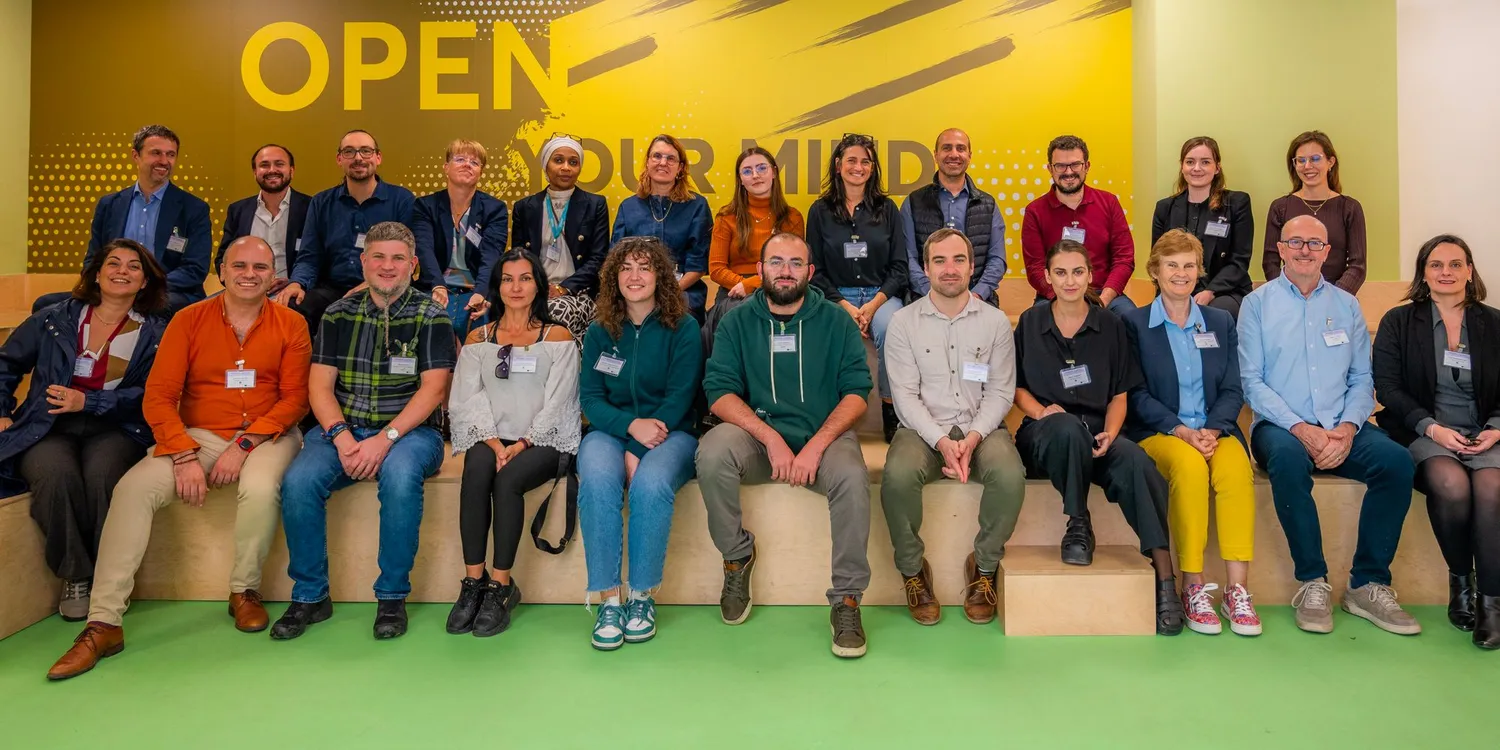
Twelve partners* from nine countries, spanning academia, industry, and innovation leaders, gathered in Crete to launch NEXTMARINE, a €4.5 million, four-year project supported by the European Union’s flagship research and innovation Horizon Europe funding programme. NEXTMARINE’s focus is on sustainable management of ecosystems and the development of a circular bioeconomy.
The project will explore extreme marine ecosystems; hydrothermal vents in the Aegean and anoxic zones in the Baltic, where life evolves under extraordinary conditions. These environments host extremophiles; microorganisms that thrive in conditions considered extreme or inhospitable for most life forms; that have developed unique biochemical strategies, offering a vast genetic reservoir of enzymes with transformative industrial potential. Using cutting-edge technologies (AI, machine learning, large language models, and robotic sensing) the partners pioneer sustainable sampling and mapping methods to unlock novel enzymes with unique biocatalytic properties for green industrial applications in food, biomaterials, and pharmaceuticals. By bridging fundamental science with real-world solutions, NEXTMARINE opens a new frontier in ocean research, driving breakthroughs that respect biodiversity and deliver tangible benefits for society.
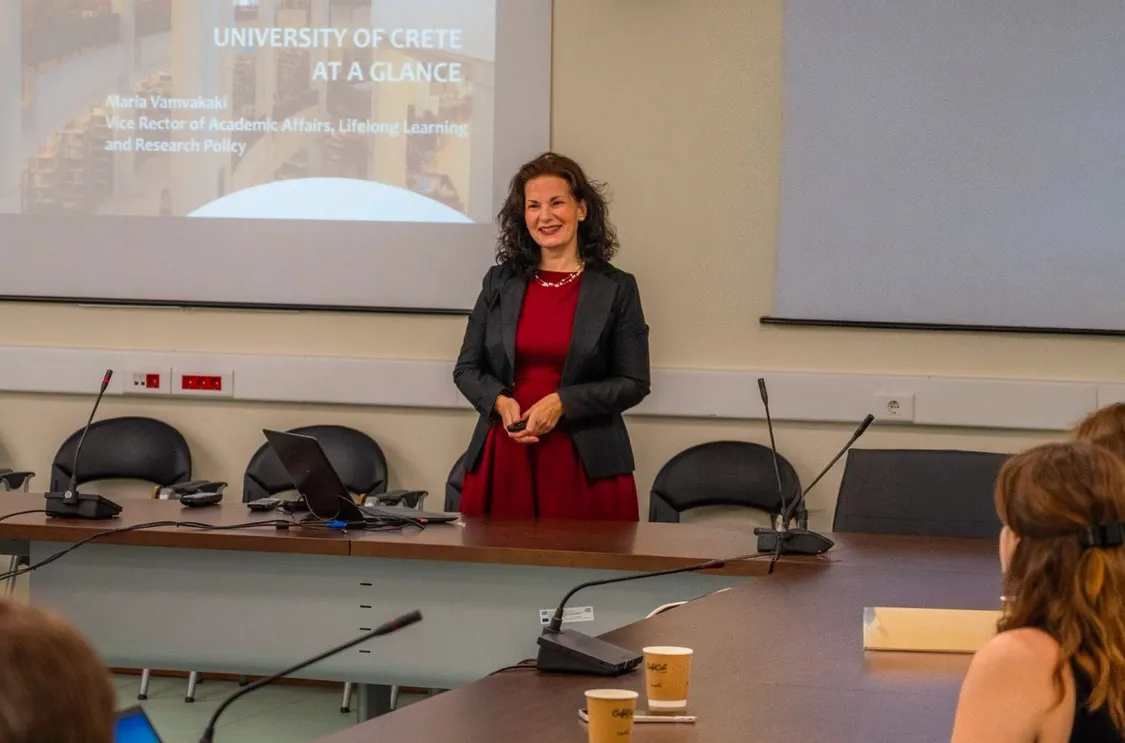
Professor Maria Vamvakaki, University of Crete
All partners were welcomed by the University of Crete from the 27th to the 28th of November to kick off the project and to align on the best way to carry it out in the next four years. The launch opened with a welcome address by Professor Maria Vamvakaki, Vice-Rector of Academic Affairs, Lifelong Learning and Research Policy at the University of Crete. The partners then had the chance to hear from Coordinators of sibling projects under the same call: XTREAM, and XTREMOLIFE. They shared valuable insights into their respective missions and methodologies, sparking discussions on cross-fertilization opportunities, laying the groundwork for joint activities and knowledge exchange across the cluster. Both days were marked by presentations of partners, their respective roles and competences within the consortium, coupled with discussions that highlighted the enthusiasm within the group and underlined the promising dynamic ahead. The partners weredelighted to have the Project and Financial Officers, Ruska Kelevska and Paul Sescu from the European Commission, participate online and share insightful guidance.
Project Coordinator, Ioannis Pavlidis, Assoc. Professor at the University of Crete, Department of Chemistry, said
“NEXTMARINE is an ambitious project that opens new horizons in ocean research and sustainable innovation. It begins with the responsible exploration of extreme marine ecosystems and progresses toward developing advanced technologies for imaging and mapping. From there, we create a pipeline that connects fundamental discoveries to real-world applications in food and pharma industry, as well as in biomaterials field, such as functional packaging. Our aim is to establish standard procedures for studying these fragile environments to understand their unique nature, and by doing so, paving the way for future innovations. If I had to describe the project in three words: sustainability, exploration, and innovation.”
NEXTMARINE is proud to be part of a dynamic cluster of in total four Horizon Europe ‘sibling projects’—EXPLORA, XTREAM, and XTREMOLIFE—funded under the same call: HORIZON-CL6-2024-CircBio-01-10 – “Targeting aquatic extremophiles for sourcing novel enzymes, drugs, metabolites and chemicals”. Together, these projects share a common mission: unlocking the potential of aquatic extremophiles to drive sustainable innovation.
Don’t miss out – subscribe and read the first joint newsletter
Stay connected with NEXTMARINE updates via our upcoming website and social media channels BlueSkye and LinkedIn.
Learn more about the EU Horizon programme
* NEXTMARINE consortium partners: University of Crete (UOC), Hellenic Centre of Marine Research (HCMR), Helmholtz Centre for Ocean Research Kiel (GEOMAR), Technical University of Denmark (DTU), Slovak University of Technology in Bratislava (STUBA), Justus Liebig University Giessen (JLU), Technical University Łodz (TUL), Flemish Institute for Technological Research (VITO), NEAT Innovation AB (NEAT), Ploa Technology Consultants SL (PLOATECH), AstraZeneca AB (AZ), EuroMarine Network (EM).

Contact us
Project coordinator
Ioannis Pavlidis, University of Crete
Project communications
Lorenzo Arduino, EuroMarine Network